
Can Non-Muslims Visit a Mosque?
Yes. Most mosques welcome visitors of any faith, and many hold open days or tours specifically for the local community. It’s courteous to check the mosque’s visiting hours or contact them ahead of a visit, especially outside of prayer times, since some areas may be reserved for worship. Find a mosque near you to see its details before visiting.
What to Wear
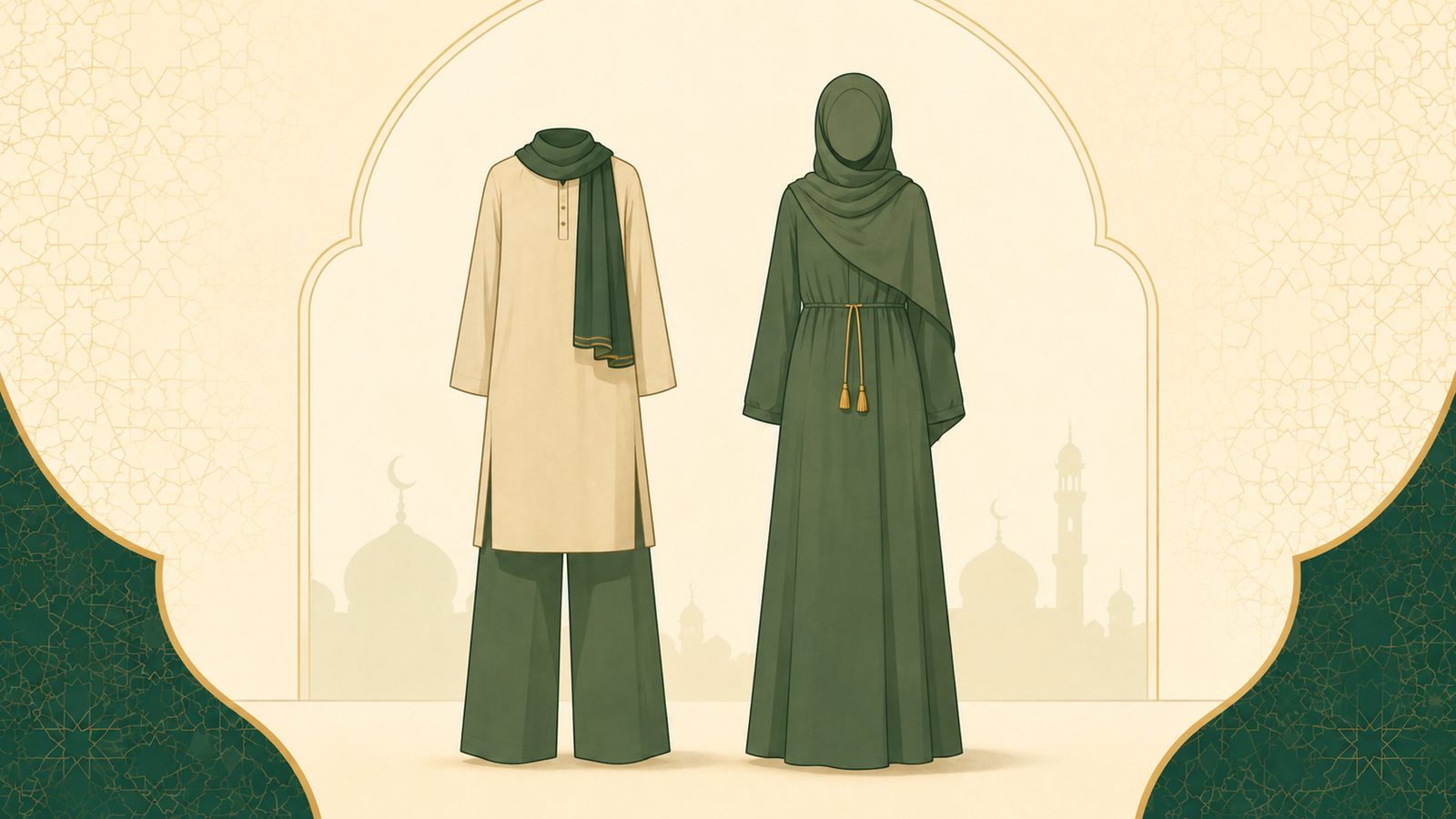
Modest dress is expected for everyone, regardless of religion:
- Both men and women: loose-fitting clothing that covers the shoulders and knees; avoid tight or sheer fabrics.
- Women: many mosques ask female visitors to cover their hair with a scarf while inside; some mosques provide scarves at the entrance if you don’t have one.
- Footwear: shoes are always removed before entering the prayer hall — wear something easy to slip on and off, and socks are a good idea.
Before You Enter
- Remove your shoes at the entrance or in the designated shoe area.
- Silence your phone.
- Check for separate entrances — many mosques have distinct sections or entrances for men and women.
Inside the Mosque
- Stay quiet, especially if prayer is in progress.
- Don’t walk directly in front of someone praying — go around or wait.
- Sit respectfully; avoid stretching your legs toward the Qibla wall (the wall the congregation faces, marked by the mihrab, a wall niche).
- Photography: ask first — many mosques are happy for respectful photos outside of prayer times, but always check, especially before photographing people.
- Children are usually welcome but should be kept calm and supervised, particularly during prayer.
If You Visit During a Prayer Time
Mosques are busiest around the five daily prayers and especially at Jummah (Friday prayer). If you’re visiting simply to observe, it’s courteous to remain at the back or in a visitor area rather than in the main congregation space, unless invited. Check prayer times for the mosque’s area to plan a visit outside of busy prayer windows if you prefer a quieter tour.
For New Muslims Visiting for the First Time
If you’ve recently embraced Islam and are visiting a mosque for the first time, don’t worry about getting every detail right — mosque communities are generally very welcoming to new Muslims. Our guides on how to pray Salah and how to perform Wudu can help you feel prepared, and most mosques are glad to answer questions or show you around.
Frequently Asked Questions
Can non-Muslims visit a mosque?
Yes. Most mosques welcome respectful visitors of any faith; it’s courteous to check visiting hours or contact the mosque ahead of time.
What should I wear to visit a mosque?
Loose-fitting clothing covering the shoulders and knees for both men and women; women are often asked to also cover their hair with a scarf.
Do I have to take my shoes off in a mosque?
Yes, shoes are always removed before entering the prayer hall and left in a designated area at the entrance.
Can I take photos inside a mosque?
Ask first. Many mosques allow respectful photography outside of prayer times, but policies vary and photographing people should always be asked about individually.
Do men and women sit separately in a mosque?
In most mosques, yes — men and women typically pray in separate sections or areas, sometimes with separate entrances.
What should I avoid doing inside a mosque?
Avoid walking directly in front of someone praying, talking loudly, wearing shoes inside the prayer hall, and stretching your legs toward the Qibla wall.
Explore more: Qibla Direction · find a mosque near you.
Reviewed for accuracy by MuslimPro.com.