
Wudu (ablution) is the act of washing specific parts of the body with water to reach a state of ritual purity before prayer. To perform wudu, you make the intention, then wash your hands, mouth, nose, face, arms, head and feet in a set order. This guide explains every step, the dua to say afterwards, and what breaks your wudu.
What Is Wudu and Why Is It Needed?
Wudu is the ritual cleansing a Muslim performs to be in a state of purity (tahara) before acts of worship such as Salah and touching the Quran. It is based on the command in the Quran (Surah Al-Maidah 5:6) and the practice of the Prophet Muhammad (peace be upon him).
You do not need to repeat wudu before every prayer if it has not been broken since the last one. To learn the prayer itself, see our guide on how to pray Salah.
What You Need Before Starting
- Clean water that is pure and unmixed with impurities.
- The intention (Niyyah) in your heart to perform wudu for worship.
- Removal of anything blocking the water from reaching the skin (such as nail polish or thick paint).
How to Perform Wudu Step by Step
Each washing is done up to three times. Once is enough to be valid, but performing it three times follows the Sunnah.
Step 1 — Make the intention and say Bismillah
Form the intention in your heart to make wudu, then begin by saying:
Step 2 — Wash both hands (3 times)

Wash both hands up to the wrists three times, making sure the water reaches between the fingers.
Step 3 — Rinse the mouth and nose (3 times)

Take water into your mouth and rinse it three times (madmadah). Then sniff water into your nostrils and blow it out three times (istinshaq), using the left hand to clear the nose.
Step 4 — Wash the face (3 times)

Wash the whole face three times, from the hairline to the bottom of the chin, and from one ear to the other. Men with a thick beard should let water run through it.
Step 5 — Wash the arms to the elbows (3 times)
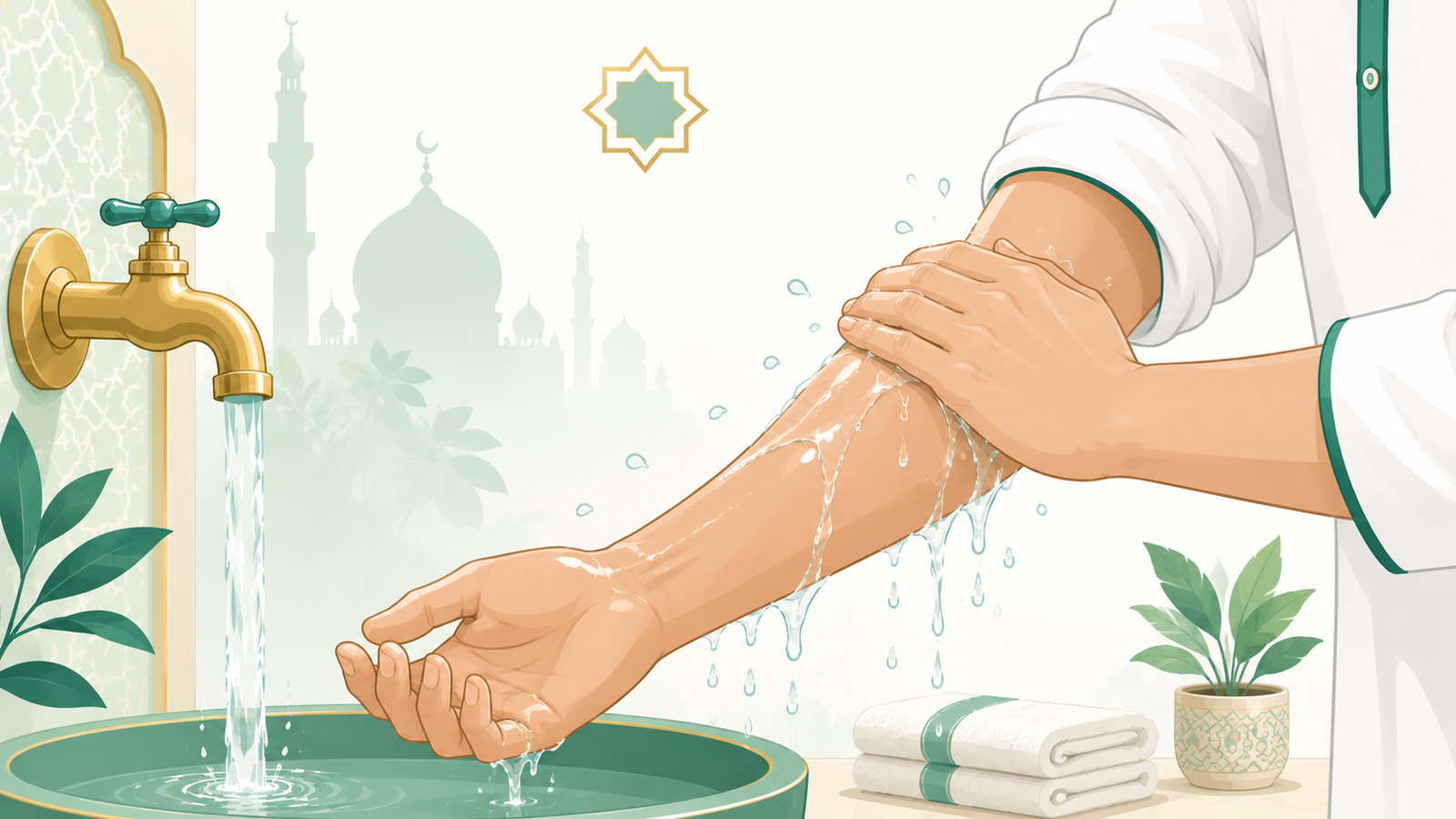
Wash the right arm from the wrist up to and including the elbow three times, then do the same with the left arm.
Step 6 — Wipe the head and ears, then wash the feet
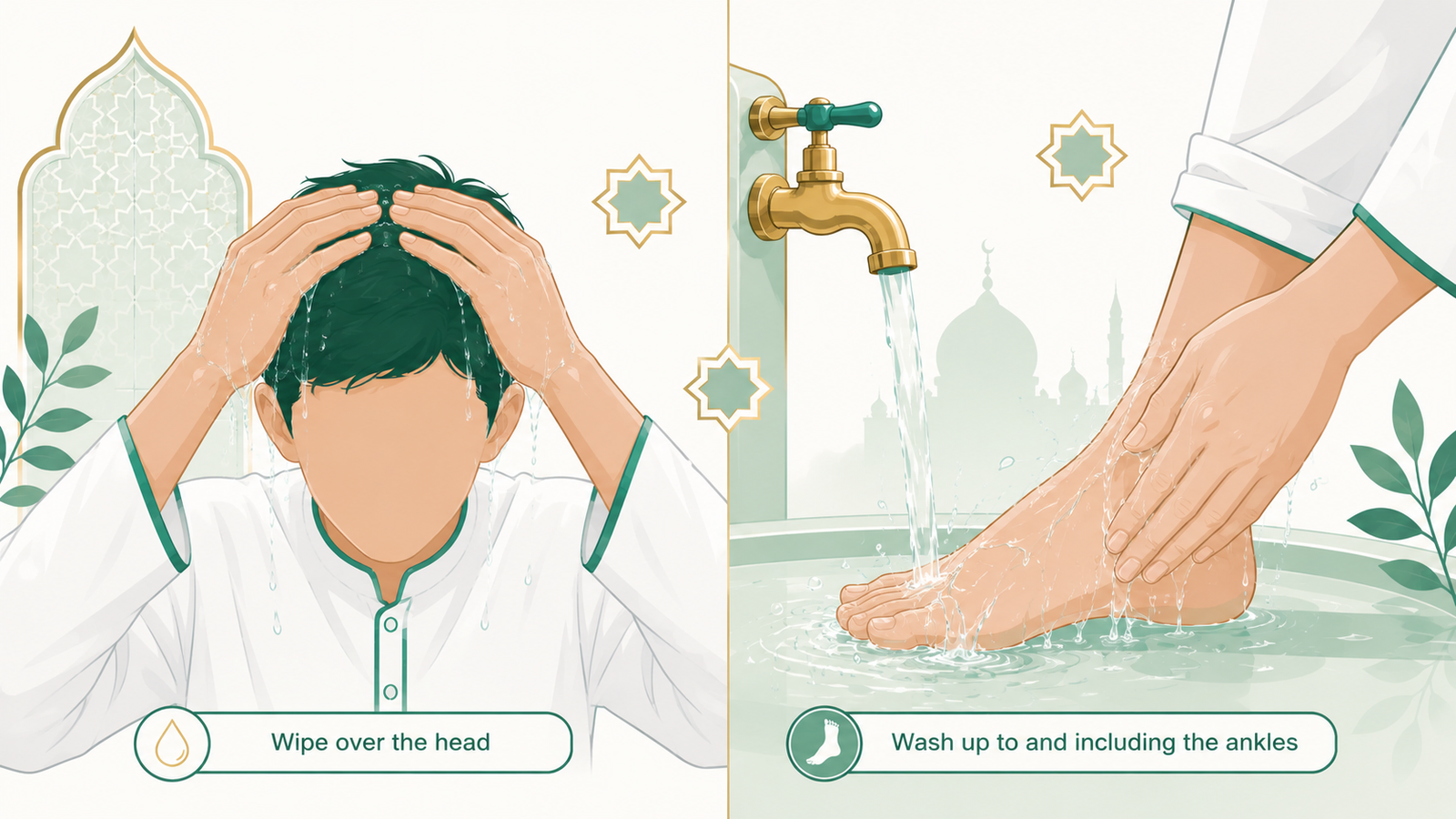
With wet hands, wipe over the head once (masah), passing from the front to the back. Then wipe the inside of the ears with your index fingers and the outside with your thumbs. Finally, wash the right foot up to and including the ankle three times, then the left foot, making sure water reaches between the toes.
Step 7 — Recite the dua after wudu
When you finish, it is recommended to say:
The Obligatory (Fard) Acts of Wudu
Some parts of wudu are obligatory (without them wudu is invalid) and others follow the Sunnah. The four acts named directly in the Quran are:
| Obligatory (Fard) act | What it means |
|---|---|
| Washing the face | Hairline to chin, ear to ear |
| Washing the arms | Up to and including the elbows |
| Wiping the head | At least part of the head, once |
| Washing the feet | Up to and including the ankles |
Rinsing the mouth and nose, washing each part three times, and following the order are confirmed Sunnah practices. Schools of thought differ slightly on which acts are strictly obligatory.
What Breaks Wudu?
Your wudu is nullified and must be renewed if any of the following happen:
- Using the toilet (passing urine or stool).
- Passing wind.
- Deep sleep where you lose awareness.
- Loss of consciousness through fainting or intoxication.
- The release of any impurity from the private parts.
If water is unavailable or harmful to use, you may perform dry ablution instead — see How to Perform Tayammum.
Tips for Doing Wudu Correctly
- Keep the order: face, arms, head, feet, as listed above.
- Do not waste water — the Sunnah is to use only what you need.
- Make sure water reaches the skin everywhere, including between fingers and toes.
- Start with the right side when washing the arms and feet.
- Do it without long gaps so the body parts do not dry out between steps.
Frequently Asked Questions
What is the correct order of wudu?
The order is: intention and Bismillah, wash the hands, rinse the mouth and nose, wash the face, wash the arms to the elbows, wipe the head and ears, then wash the feet to the ankles.
How many times do you wash each part in wudu?
Each part is washed up to three times. Washing once is valid, but three times follows the Sunnah. The head is only wiped once.
Does wudu break if I touch a dog or eat food?
No. Eating food or touching an animal does not break wudu. Only specific acts such as using the toilet, passing wind, or deep sleep nullify it.
Can I pray with the same wudu for more than one prayer?
Yes. One wudu remains valid for as many prayers as you like until it is broken by something that nullifies it.
Do I need to make a new wudu after sleeping?
Deep sleep where you lose awareness breaks wudu, so you should renew it. Brief drowsiness while still aware does not.
What if I cannot use water?
If water is unavailable, scarce, or harmful to your health, you may perform Tayammum (dry ablution) using clean earth instead.
Keep Learning
Now that you can make wudu, continue with How to Pray Salah Step by Step and How to Perform Tayammum. To pray on time, check today’s prayer times for your city.
A note on sources and schools of thought: This guide follows the broadly accepted Sunni method. The recognised schools of jurisprudence differ on minor details such as which acts are strictly obligatory and the exact wiping of the head. For verified texts see Quran 5:6 and Sunnah.com, and consult a knowledgeable local imam for personalised guidance.