
If you are learning to pray, one of the first questions is simple: how many rakats is each prayer? A rakat is one full unit of Salah. This guide gives you the complete table — the obligatory (Fard) rakats everyone agrees on, plus the Sunnah, Witr and Nafl rakats many Muslims add.
What Is a Rakat?
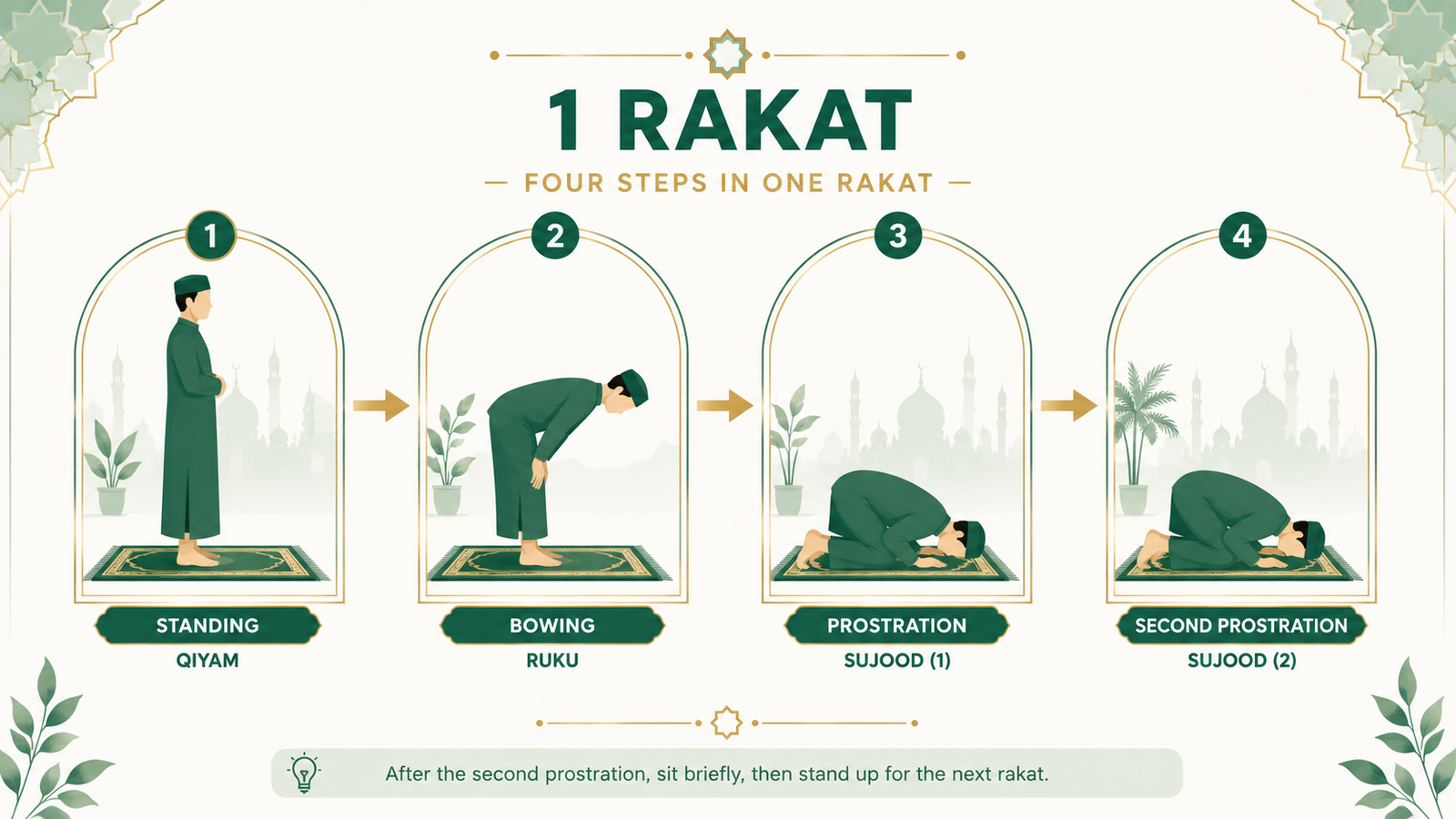
A rakat is one complete cycle of the prayer: standing and reciting, bowing (Ruku), and prostrating twice (Sujud), before either standing up for the next rakat or sitting to finish. When we say a prayer is “4 rakats”, it means you repeat that cycle four times. Learn the full sequence in our guide on how to pray Salah.
How Many Fard (Obligatory) Rakats in Each Prayer?
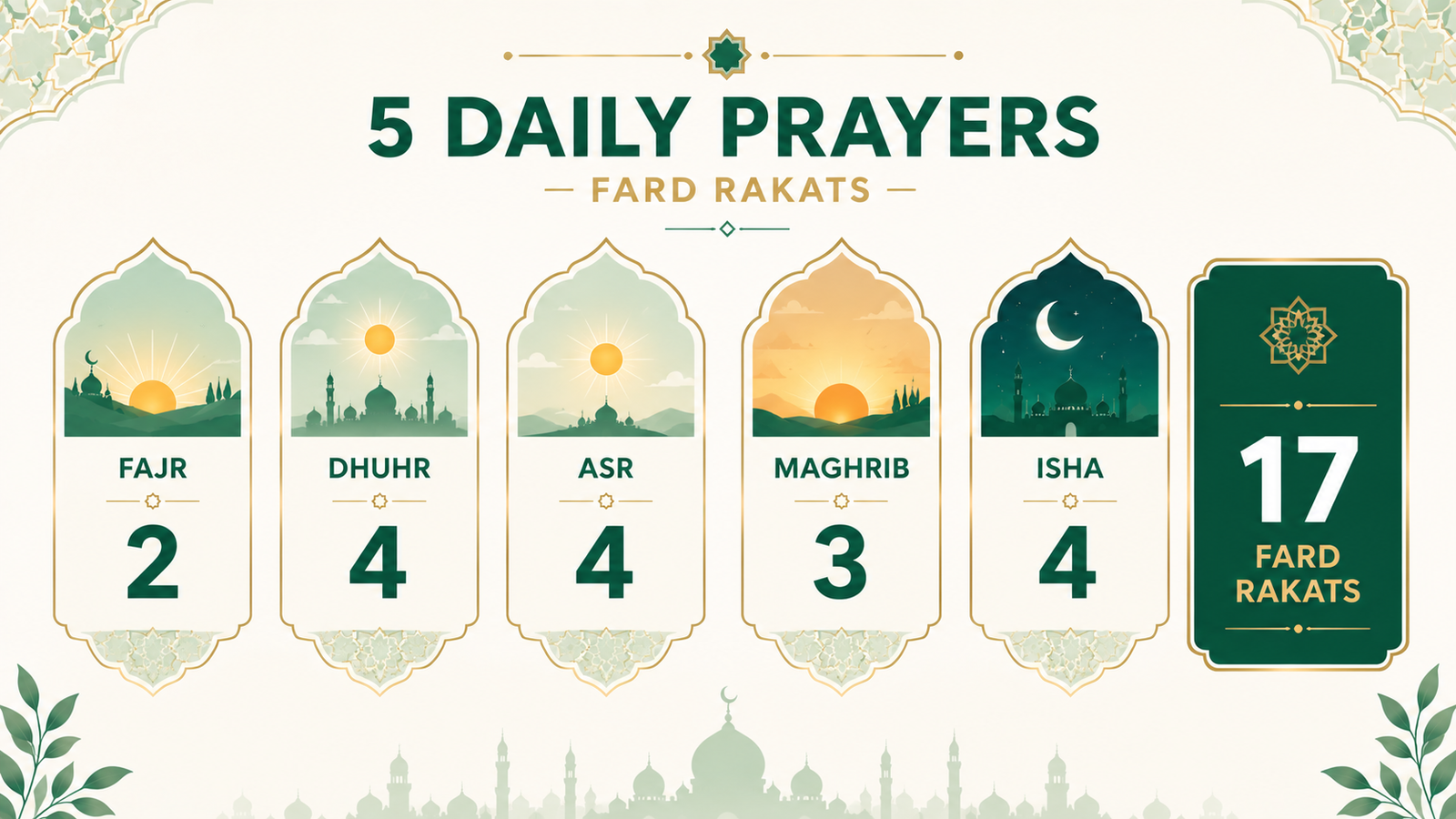
The Fard rakats are obligatory and agreed upon by all schools of thought. This is the table to memorise first:
| Prayer | Time of day | Fard rakats |
|---|---|---|
| Fajr | Dawn | 2 |
| Dhuhr | Midday | 4 |
| Asr | Afternoon | 4 |
| Maghrib | Sunset | 3 |
| Isha | Night | 4 |
| Total Fard per day | 17 | |
On Fridays, the Dhuhr prayer is replaced for men by the 2-rakat Jummah (Friday) prayer prayed in congregation.
Fard, Sunnah and Nafl: What Is the Difference?
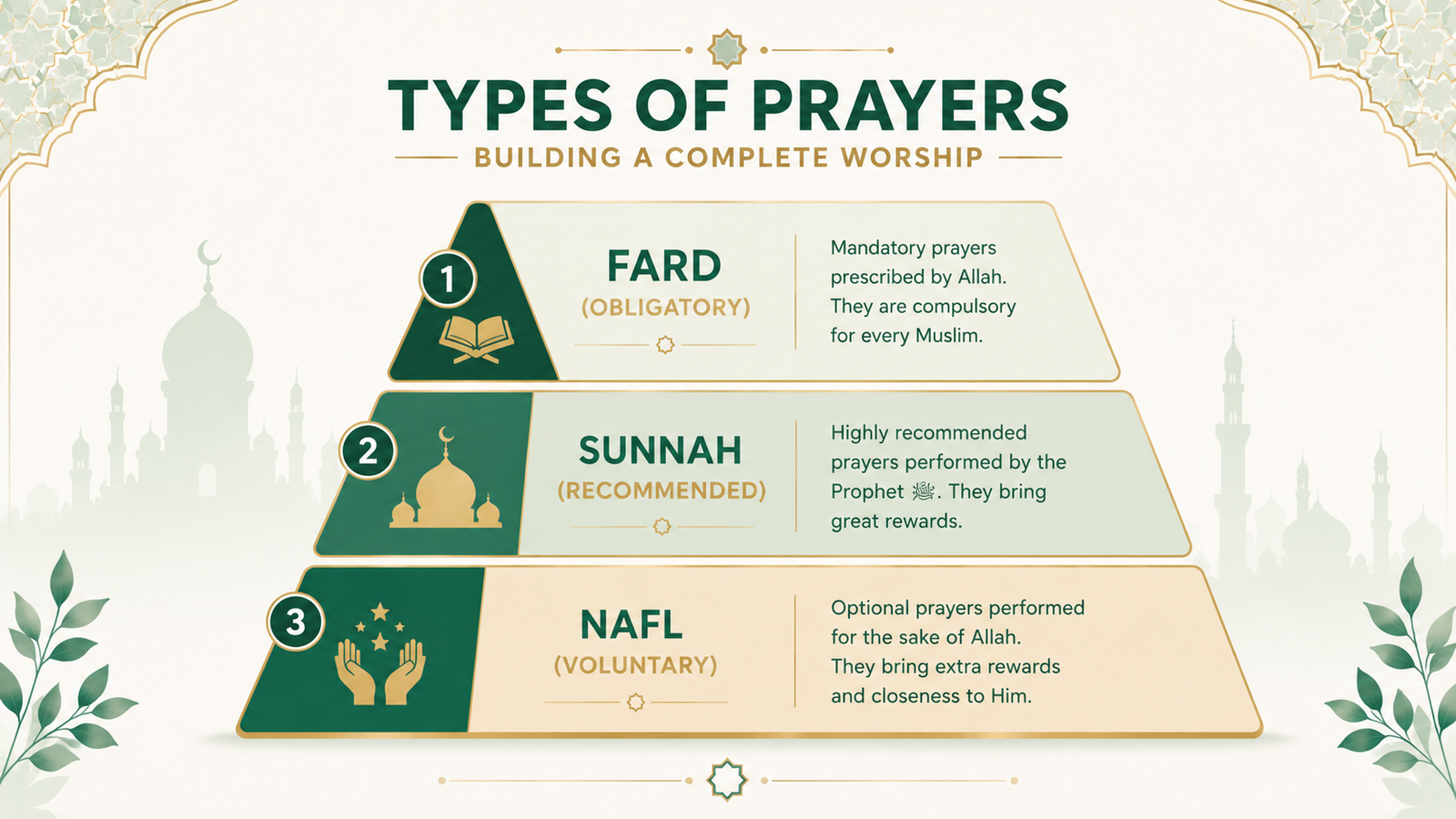
Not every rakat is obligatory. Prayers fall into three main categories:
- Fard (obligatory): required of every Muslim; missing them is a sin.
- Sunnah (recommended): regularly prayed by the Prophet (peace be upon him). The emphasised ones are called Sunnah Mu'akkadah.
- Nafl (voluntary): extra prayers offered for additional reward, with no sin for leaving them.
Complete Rakat Table (Fard, Sunnah, Witr and Nafl)
The table below shows a commonly followed daily pattern. The Sunnah and Nafl counts vary between schools of thought, so treat them as a widely used guide rather than a fixed rule.
| Prayer | Sunnah before | Fard | Sunnah after | Witr / Nafl |
|---|---|---|---|---|
| Fajr | 2 | 2 | – | – |
| Dhuhr | 4 | 4 | 2 | – |
| Asr | 4 (optional) | 4 | – | – |
| Maghrib | – | 3 | 2 | – |
| Isha | 4 (optional) | 4 | 2 | 3 Witr |
Witr is an odd-numbered prayer (usually 3 rakats) prayed after Isha. It is considered wajib (necessary) in the Hanafi school and a strongly emphasised Sunnah in the others. See Sunnah and Nafl prayers for more detail.
Rakats by Prayer (Quick Reference)
How many rakats in Fajr?
Fajr has 2 Fard rakats, usually preceded by 2 emphasised Sunnah rakats (4 in total).
How many rakats in Dhuhr?
Dhuhr has 4 Fard rakats, with 4 Sunnah before and 2 Sunnah after commonly prayed.
How many rakats in Asr?
Asr has 4 Fard rakats. Some pray 4 optional Sunnah beforehand.
How many rakats in Maghrib?
Maghrib has 3 Fard rakats, with 2 Sunnah commonly prayed after.
How many rakats in Isha?
Isha has 4 Fard rakats, followed by 2 Sunnah and then 3 rakats of Witr.
Frequently Asked Questions
How many rakats are there in a day?
There are 17 obligatory (Fard) rakats across the five daily prayers. With the commonly prayed Sunnah, Witr and Nafl rakats, the daily total is often around 40.
Which prayer has the most rakats?
Dhuhr, Asr and Isha each have 4 Fard rakats. When Sunnah and Witr are added, Isha usually has the most rakats overall.
Are Sunnah rakats compulsory?
No. Only the Fard rakats are obligatory. Sunnah rakats are recommended and carry extra reward, but missing them is not a sin.
How many rakats is the Friday (Jummah) prayer?
The Jummah prayer is 2 Fard rakats prayed in congregation, replacing the Dhuhr prayer for men. Sunnah rakats are prayed before and after.
How many rakats when travelling?
While travelling you may shorten the 4-rakat prayers (Dhuhr, Asr, Isha) to 2 rakats each. Fajr and Maghrib are not shortened. See how to pray Salah while travelling.
Keep Learning
Now that you know the counts, learn the movements in How to Pray Salah Step by Step and prepare with How to Perform Wudu. To pray on time, check today's prayer times for your city.
A note on sources and schools of thought: The Fard rakat counts are agreed upon by all Sunni schools. The Sunnah, Witr and Nafl counts shown here reflect a widely followed pattern and differ slightly between the schools of jurisprudence. For verified texts see Sunnah.com, and consult a knowledgeable local imam for personalised guidance.